Fixed “The Device Has Either Stopped Responding or Is Disconnected” iPhone
Stuck with "This device has stopped responding or is disconnected" on iPhone? Learn 5 effective solutions to fix connection issues and transfer files from PC to iPhone without errors.


How to fix the device has either stopped responding or is disconnected?
I am copying a large amount of data from my Windows PC to my iPhone, but the transfer stops and this error keeps appearing. How can I reconnect the iPhone and finish the transfer?
Quick answer: Reconnect the iPhone while it is unlocked, tap Trust, and try a data-capable cable and another USB port. If the message returns, copy fewer files at a time, update Windows and Apple device software, and then reinstall the Apple device driver. Start with the fast, low-risk checks below.

The error appears when Windows loses communication with the iPhone while reading or writing data. It can interrupt a File Explorer transfer even when the iPhone was connected successfully at first.
Why Does Windows Say the iPhone Stopped Responding or Disconnected?
Common triggers include a charge-only or damaged cable, an unstable USB port, a locked iPhone or unconfirmed Trust prompt, an interrupted large transfer, outdated Apple device software or drivers, and a temporary iOS or Windows fault. The message does not identify one exact cause, so test the connection before changing drivers.
Primary Causes:
📁 Too many files copied at once - Overwhelming the transfer process with large quantities of files simultaneously
🔌 Physical connection problems - Faulty cables, loose connections, or damaged USB ports
⚙️ Hardware and driver issues - Outdated or corrupted USB drivers, or computer hardware malfunctions
🔒 iPhone security settings - USB Restricted Mode blocking connections to unlocked devices
7 Fixes for “The Device Has Either Stopped Responding or Is Disconnected”
Try these methods in order. After each one, copy a single small file to check whether the iPhone connection is stable.
1. Unlock the iPhone, Reconnect It, and Tap Trust
Disconnect the cable, unlock the iPhone, and connect it again. If the Trust This Computer? alert appears, tap Trust and enter the iPhone passcode. Keep the iPhone unlocked while you test the transfer.
- ★Tip:
- If the Trust alert does not appear, reconnect the iPhone after unlocking it. Apple also recommends checking the cable, USB port, Apple Devices app or iTunes, Windows updates, and device drivers.
2. Check USB Ports and Cables (Most Common Fix)
A cable can charge an iPhone without carrying data. Use an Apple or certified cable that supports both charging and data, inspect the connectors for damage or debris, and connect directly to another USB port instead of an unpowered hub.
- Test another data-capable cable in the same USB port.
- Test the same cable in another USB port.
- If possible, connect the iPhone to another Windows PC to isolate the problem.
See Apple’s iPhone recognition checklist for additional connection checks.
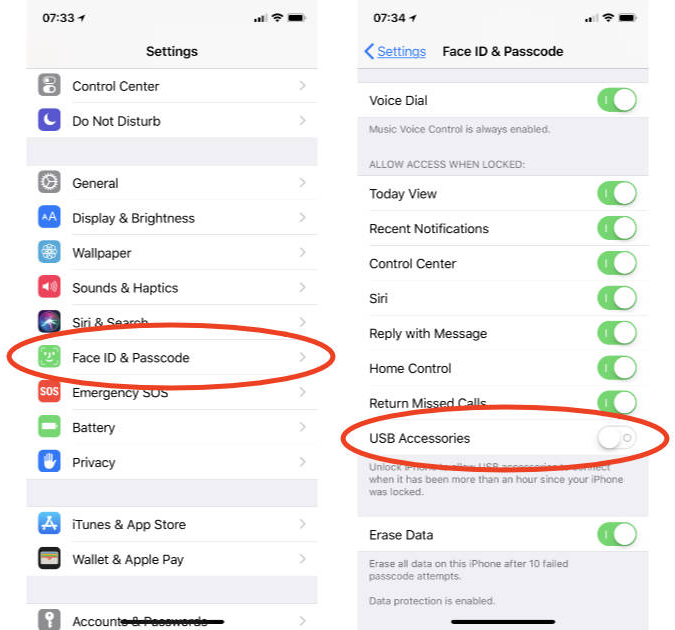
3. Disable USB Restricted Mode on iPhone
iOS security features may block connections to computers if your iPhone hasn't been unlocked recently.
Step 1. Go to Settings > Face ID & Passcode.
Step 2. Enter your passcode.
Step 3. Scroll down to USB Accessories.
Step 4. Toggle the switch to enable USB access.
4. Copy Fewer Files at a Time and Keep the iPhone Awake
Copy one small file first. If that works, transfer the remaining files in smaller batches instead of moving the entire folder at once. Keep the iPhone unlocked, avoid moving the cable, and wait for each batch to finish before starting another.
5. Update Windows and the Apple Device Driver
Install current Windows updates and update the Apple Devices app or iTunes. Then right-click Start, open Device Manager, locate the connected iPhone or Apple device, right-click it, and select Update driver > Search automatically for drivers.
If Windows does not find a newer driver, check Windows Update. Avoid downloading drivers from unofficial websites. Microsoft documents these options in its Device Manager driver guide.
6. Reinstall the Apple Device Driver
Completely reinstalling USB controllers can resolve deeper driver conflicts.
Step 1. Press Windows + R > Type [devmgmt.msc] > Press Enter.
Step 2. Expand Universal Serial Bus controllers.
Step 3. Right-click Apple Mobile Device USB Driver > Select Uninstall device.
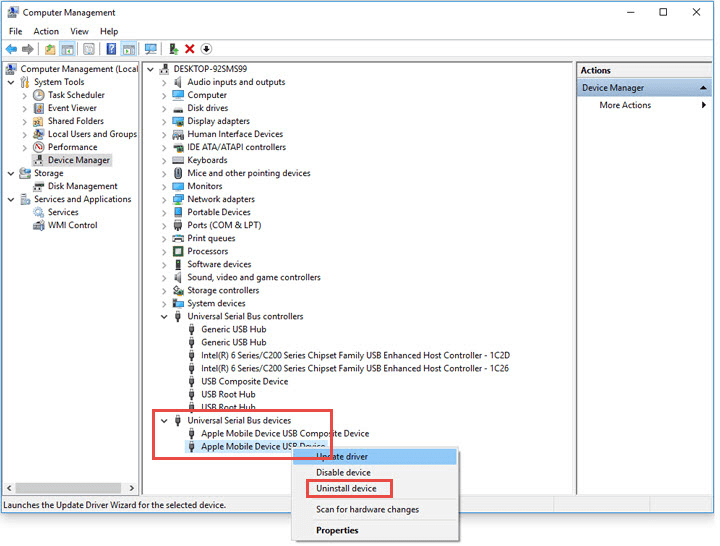
Step 4. Go to Action > Scan for hardware changes to reinstall.
7. Force Restart Your Device
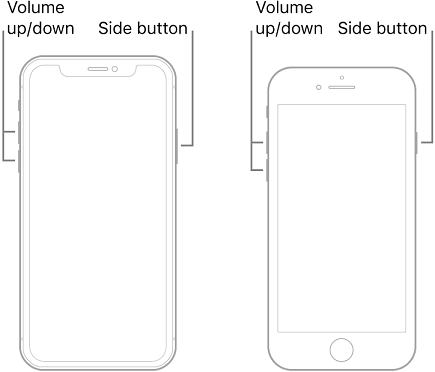
Restart Windows normally. If the iPhone remains unresponsive, force-restart it using the buttons for your model:
Restart Methods by Model:
- iPhone 8 & later (Face ID): Quickly press/release Volume Up > Quickly press/release Volume Down > Hold Side button until Apple logo appears
- iPhone 7/7 Plus:Hold Volume Down + Side buttons simultaneously until Apple logo appears
- iPhone 6s/SE & earlier (Home button):Hold Home + Side buttons together until Apple logo appears
Bonus: Transfer Files from PC to iPhone Without Errors
If File Explorer still interrupts the transfer but Windows recognizes the iPhone, FoneTool provides a PC-to-iPhone workflow for supported photos, music, videos, contacts, and ringtones. It cannot repair a damaged cable or an iPhone that Windows does not recognize, so complete the connection checks first.
- Simple one-click transfers without technical knowledge
- Transfer ~100 photos in just 3 seconds
- Bypasses common Windows connection issues
- Support photos, videos, music, contacts, and more
- Includes iOS system repair functionality

100% Secure
Before starting, review the official PC-to-iPhone transfer guide for supported file formats and the current iOS app requirements.
Step 1. Download FoneTool > Connect iPhone via USB > Launch application.
Step 2. Select Phone Transfer > PC to iPhone > Click Get Started.
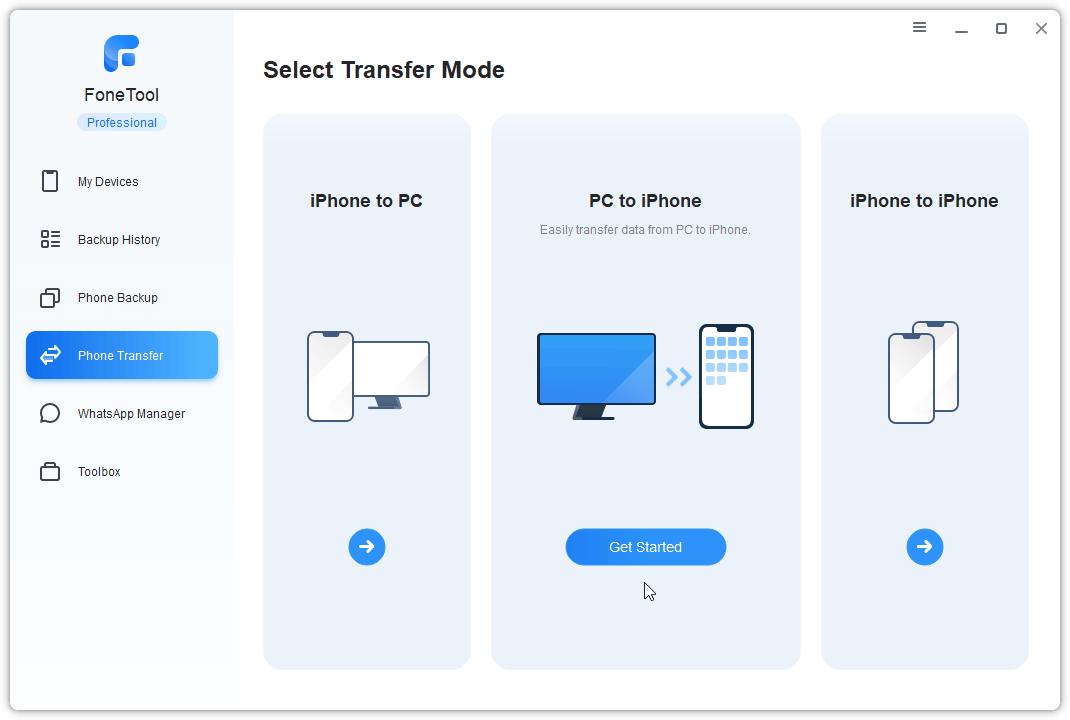
Step 3. Click the folder icon to add supported files, or drag supported files into the transfer window.
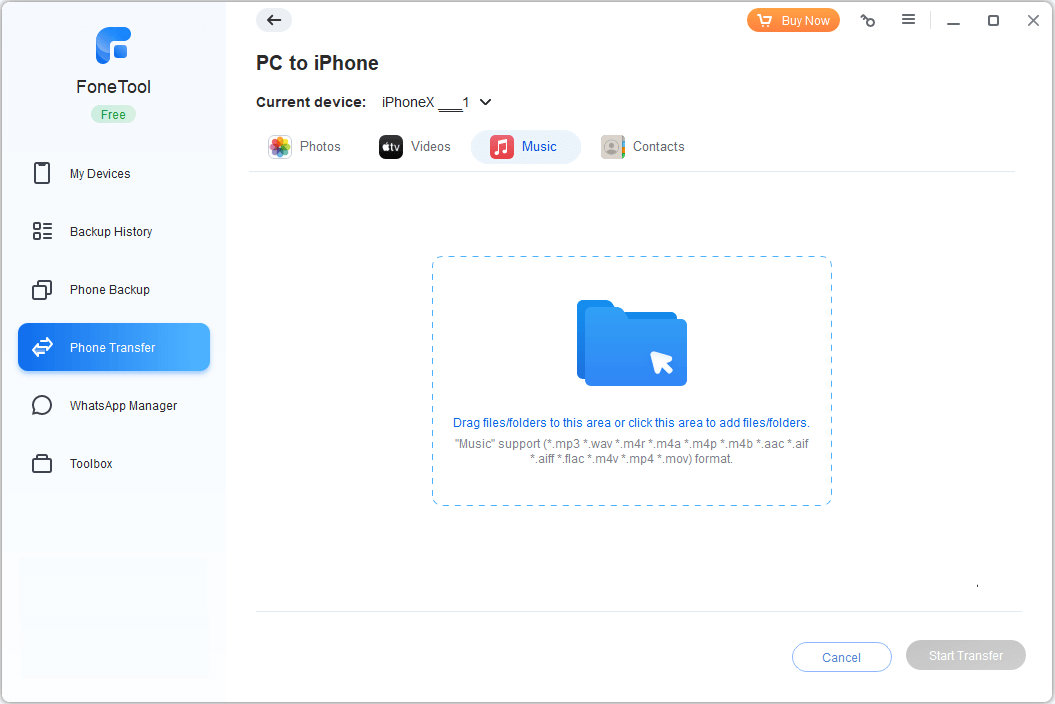
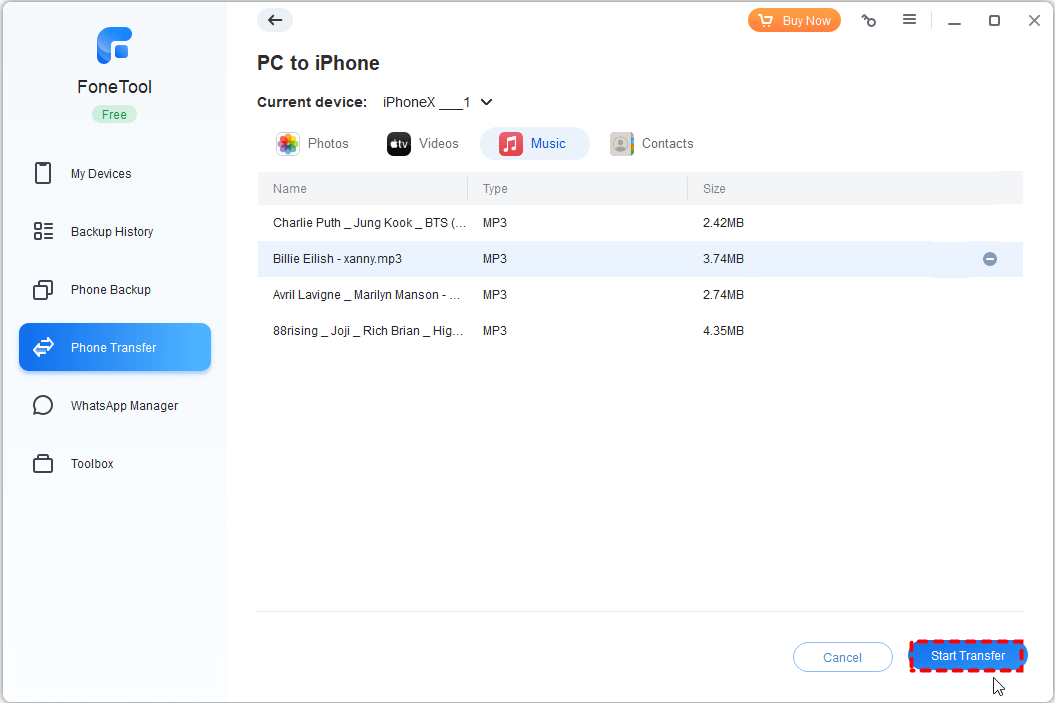
Step 4. Follow any prompt to install or open the FoneTool iOS app when required for the selected workflow. Confirm the list, then click Start Transfer.
FAQs
Conclusion
The "device has either stopped responding or is disconnected" error can be frustrating, but these proven solutions should resolve most iPhone connection issues. Start with basic cable and port checks, then progress through software settings and driver updates.
For reliable, error-free file transfers, we recommend FoneTool - its optimized transfer process avoids common Windows connection problems entirely. Whether you're moving photos, documents, or other files, this professional tool ensures your data transfers complete successfully every time.
FoneTool - All-in-one iPhone Data Manager
Transfer, backup and manage data on iPhone, iPad and iPod touch in an easy way.
-
 iOS 27 Compatible
 iPhone 17 Supported
Windows 11/10/8/8.1/7

100% Secure

Kelsey is an English editor at FoneTool, passionate about helping users solve tech issues. She specializes in iPhone data management, backup, and recovery. In her free time, she enjoys learning IT skills and spending time with loved ones.
Read author info >>



 as a preferred
source on Google
as a preferred
source on Google