Why iPhone Emergency Update Suddenly Pulled by Apple?
Discover why iPhone emergency update suddenly pulled by Apple, and how to handle issues that may arise. Follow our step-by-step solutions for a seamless experience.


Apple sometimes releases emergency updates to address urgent security threats, critical bugs, or performance issues that require immediate attention. However, in rare cases, Apple may suddenly cancel an emergency update due to unforeseen issues or bugs discovered after release. What should you do if you find an iPhone emergency update suddenly pulled by Apple? The following article tells you everything you need to know.
Why Would Apple Pull an iPhone Emergency Update?
Apple’s decision to revoke a software release is rare but serious. It usually means that after the update was made available, the company discovered issues more severe than those the update was intended to fix. Common reasons include:
✍ Critical New Bugs: The update itself may have introduced unexpected, significant issues, such as causing apps to crash frequently, severe battery drain, or problems with cellular connectivity and Wi-Fi.
✍ Security Vulnerability: In rare cases, a fix might inadvertently create a new security loophole. Pulling the update prevents more users from potentially exposing their devices.
✍ Installation Failures: The update could cause devices to get stuck during the installation process, enter a boot loop, or become unresponsive, requiring complex recovery steps.
✍ Compatibility Conflicts: The software might have severe conflicts with specific hardware components or widely used third-party apps, leading to instability.
How to Check If Your iPhone Was Affected - 3 Options
If you’re concerned your iPhone may have been impacted by a pulled emergency update, here are three simple ways to check.
Option 1. Check Apple’s System Status
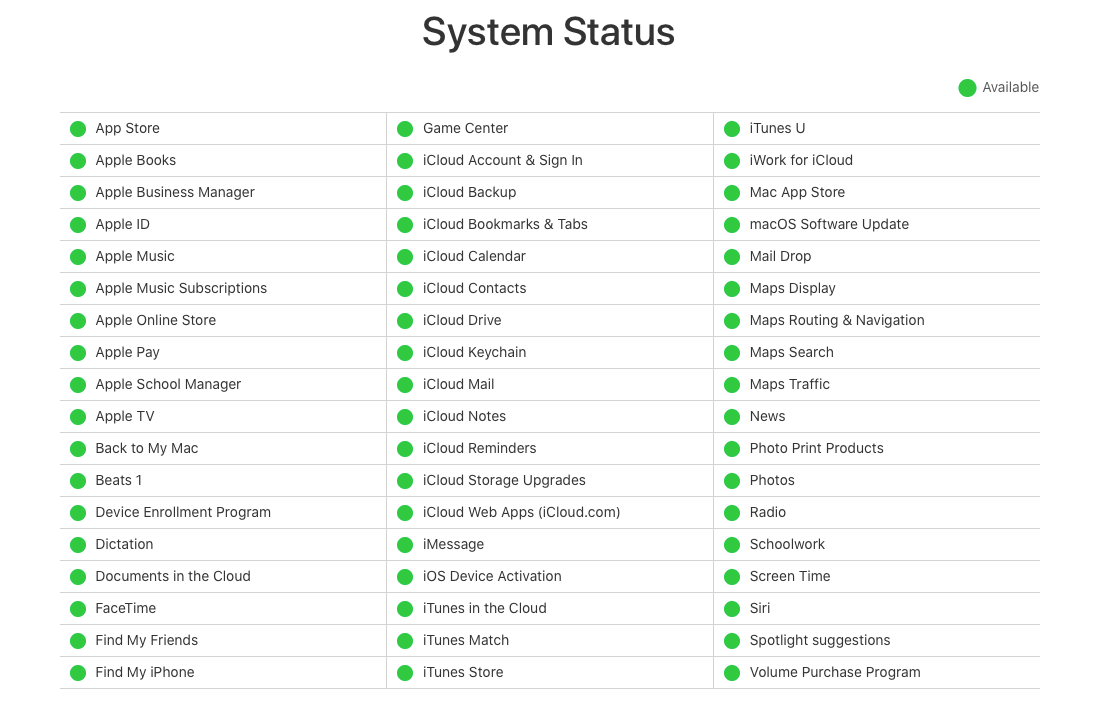
The first and most straightforward way is to visit the Apple System Status page to see if Apple's servers are functioning properly. Look for a green circle to see if there are any software update issues or notifications.
Option 2. Check the Version Number
On your iPhone, you can go to Settings > General > About. Look for the iOS version listed under Software Version. If the version matches the extracted update, your iPhone is likely affected.
Option 3. Review Update Logs
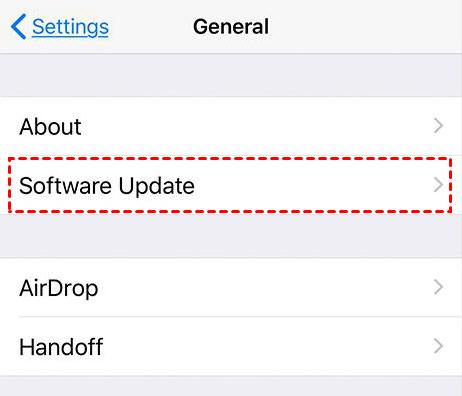
You should also know that if an update is no longer available or has been removed, it could be a sign that Apple has removed the update. To check this, open Settings > General > Software Update.
What to Do If You Installed the Pulled Update?
If you’ve already installed an emergency update that was later pulled, you might experience system instability, app crashes, or other irregularities. Don’t worry - below are several ways to address the problem.
Way 1. Remove and Download the Correct Update
If you install an update before Apple releases it, then you need to uninstall the pulled update and download the correct, stable version. Here are the detailed step-by-step instructions.
Step 1. Delete the problematic update
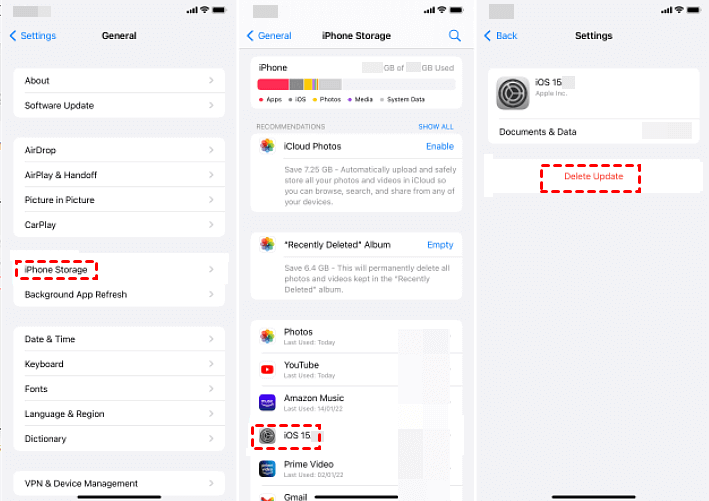
- Go to Settings > General > iPhone Storage.
- Find the pulled update in the list of apps.
- Tap the update and then tap Delete Update.
Step 2. Check for the latest stable update
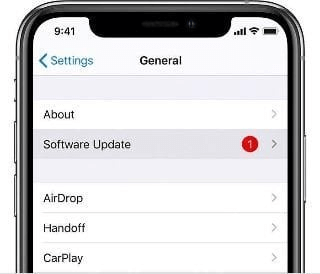
- After deleting the problematic update, go to Settings > General > Software Update.
- If Apple releases a new stable version, tap Download and Install to update your iPhone.
Step 3. Complete the Installation
Follow the on-screen instructions to finish installing the update. After the installation is complete, restart your iPhone to ensure all changes take effect.
Way 2. Force Restart Your iPhone to Fix Update Issues
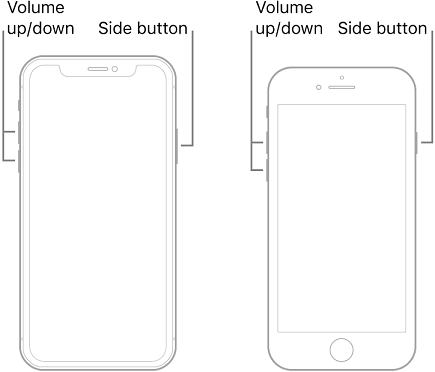
Force restarting a device can sometimes clear up minor software glitches caused by a buggy or incomplete update. Including when you encountered iPhone emergency update suddenly pulled. Different iPhone models have different force restart methods, so choose the appropriate method to force restart your device.
For iPhones with Face ID (iPhone X and later): Press and quickly release the Volume Up button > Press and quickly release the Volume Down button > Press and hold the Side button until you see the Apple logo, then release it.
For iPhones with Touch ID (iPhone 8 and earlier): Press and hold the Side button and Home button simultaneously until you see the Apple logo.
Also Read: [Updated!] Fixes to iPhone Force Restart not Working
Way 3. Use FoneTool Repair to Fix System Issues
If your iPhone experiences persistent problems after installing a pulled update, such as crashing apps, system instability, or boot loops, FoneTool Repair offers a professional solution to fix these iOS system issues effectively.
This powerful iOS system repair tool is the best way to fix iOS/iPadOS issues without data loss
Step 1. Download and install FoneTool Repair on your Windows PC, and connect your iPhone via USB cable.
Step 2. Launch FoneTool Repair and select iOS System Repair from the main interface.
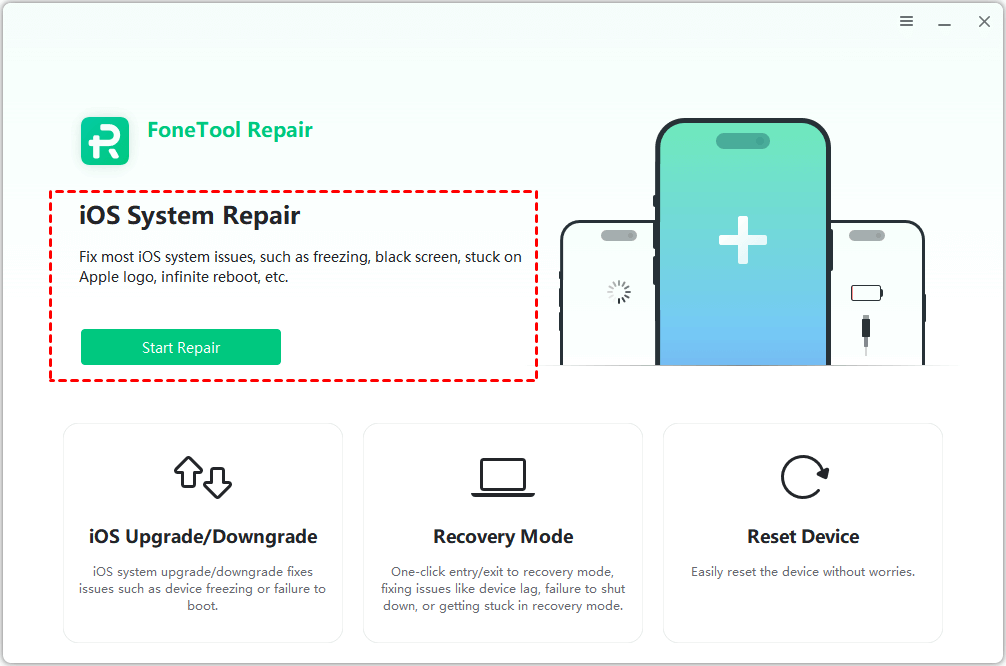
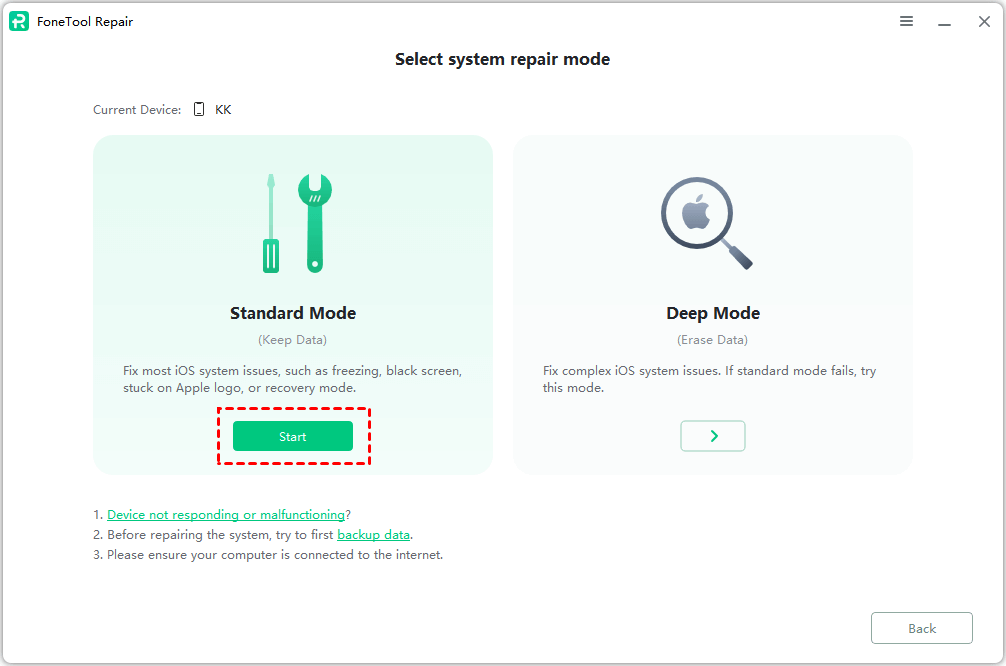
Step 3. You can choose Standard Mode to fix the issue and preserve your data.
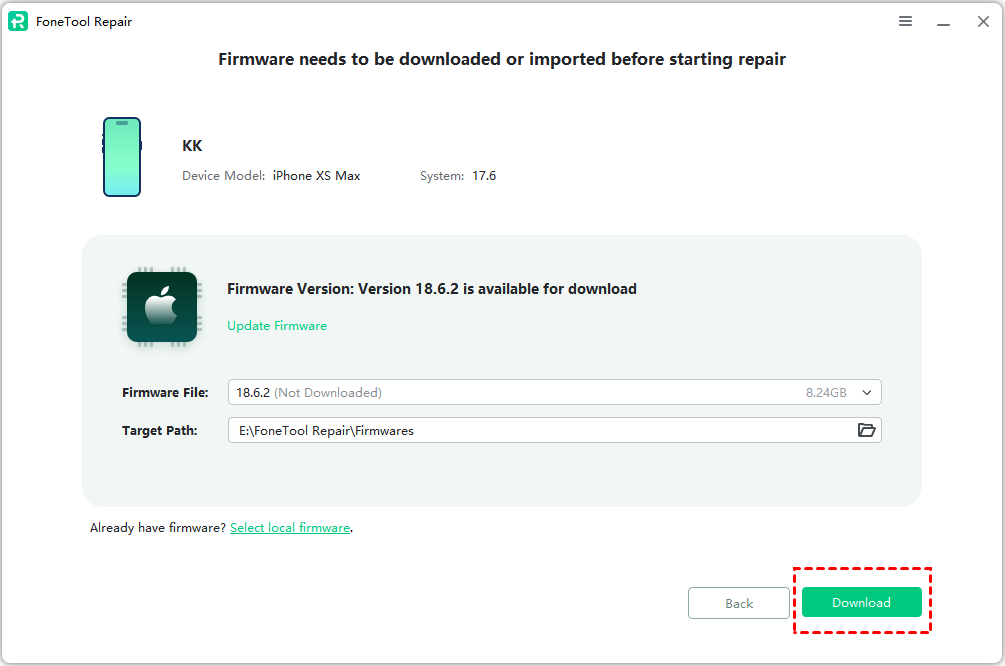
Step 4. Download the required firmware package as prompted.
Step 5. Click Start Repair to begin fixing system issues.
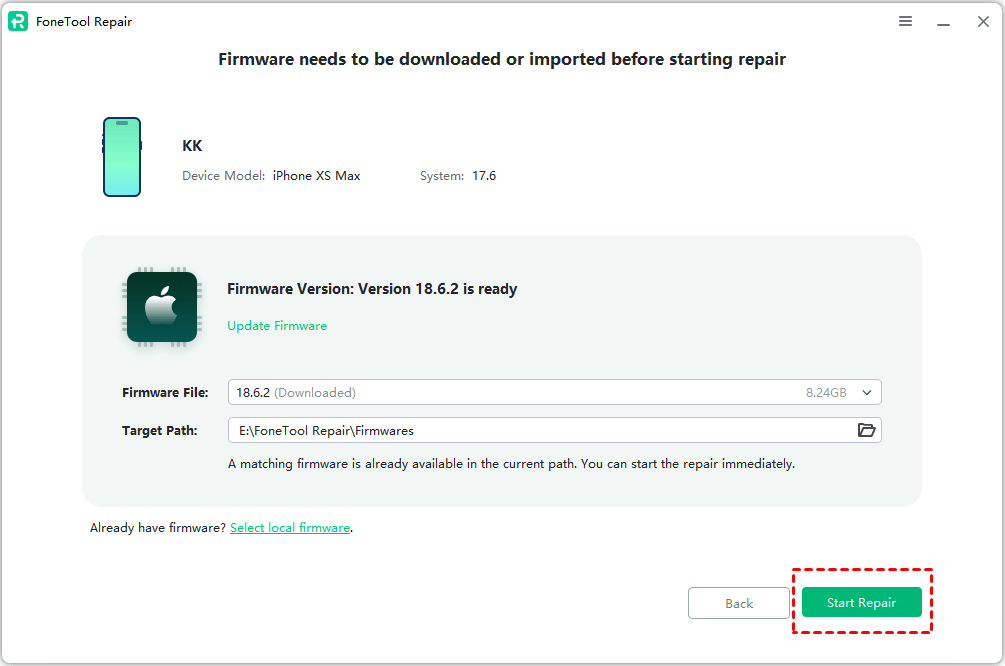
How to Stay Informed and Protected
1. Follow Official Channels: Keep an eye on Apple's official System Status page and newsroom.
2. Practice Cautious Updating: For future emergency updates, it’s often prudent to wait 24-48 hours before installing to see if any widespread issues are reported by early adopters and tech news outlets.
3. Always Maintain Backups: Regularly back up your iPhone to iCloud or your computer. A backup is your safety net for any failed update scenario.
Backup iPhone To Avoid Data Loss [Recommended]
Given that a pulled update can increase the risk of data loss, we strongly recommend backing up your iPhone regularly. Developing a consistent backup habit is one of the best ways to safeguard your information.
FoneTool is a free, user-friendly iPhone backup tool that lets you quickly back up all your data, including WhatsApp, photos, videos, messages, music, and contacts, without technical knowledge.
★ Offers flexible storage: backup to NAS, external drives, or local folders
★ High-speed backups (e.g., 2000+ contacts in under 20 seconds)
★ Restore data safely to any iOS device, even under different Apple IDs
★ Fully compatible with the latest iOS and Windows 11/10/8/7
Downloadthis tool for free on your computer, and connect your iPhone to the computerwith USB. Then follow the steps to back up your iPhone data.
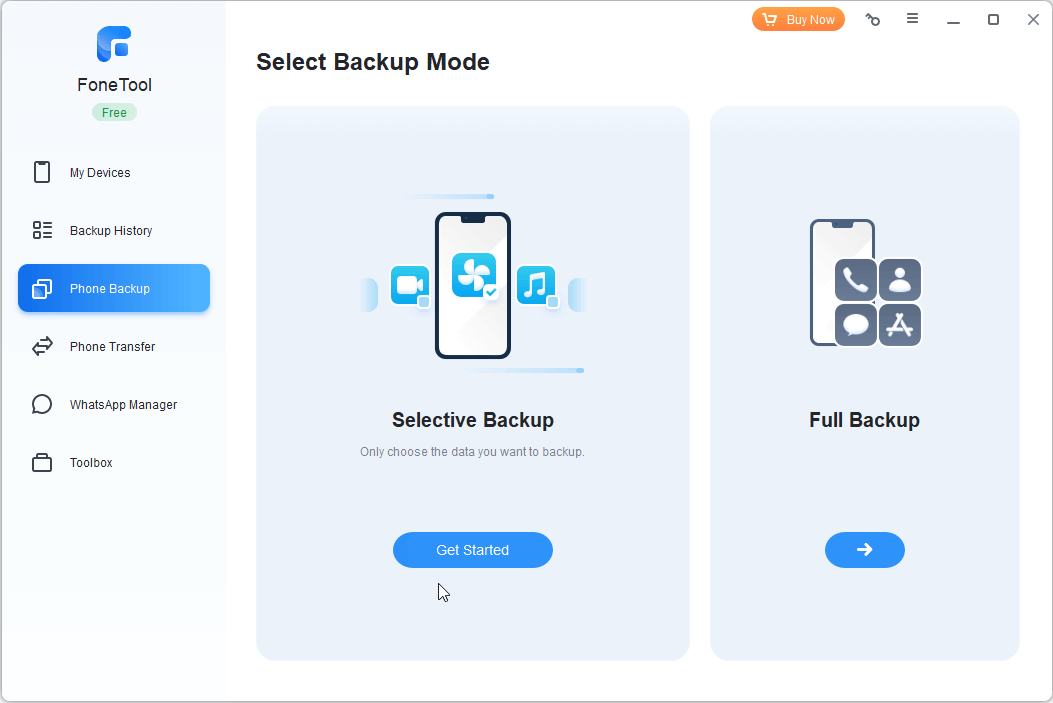
Step 1. RunFoneTool > Go to Phone Backup on the interface > Here, you can choose Full Backup to back up everything on iPhone> Tap Get Started. Or click the Selective Backup optionas you like.
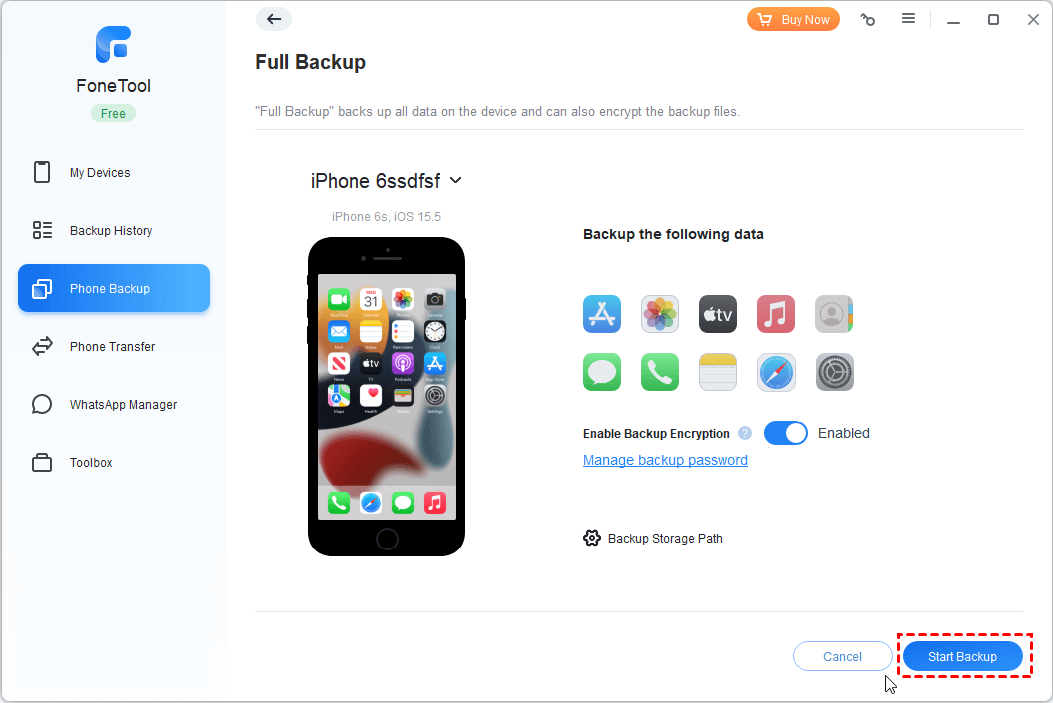
Step 2. We take Full Backup as an example > Then, check Enable Backup Encryption to protect your privacy data> Choose a storage path to save the backup > Tap Start Backup to begin.
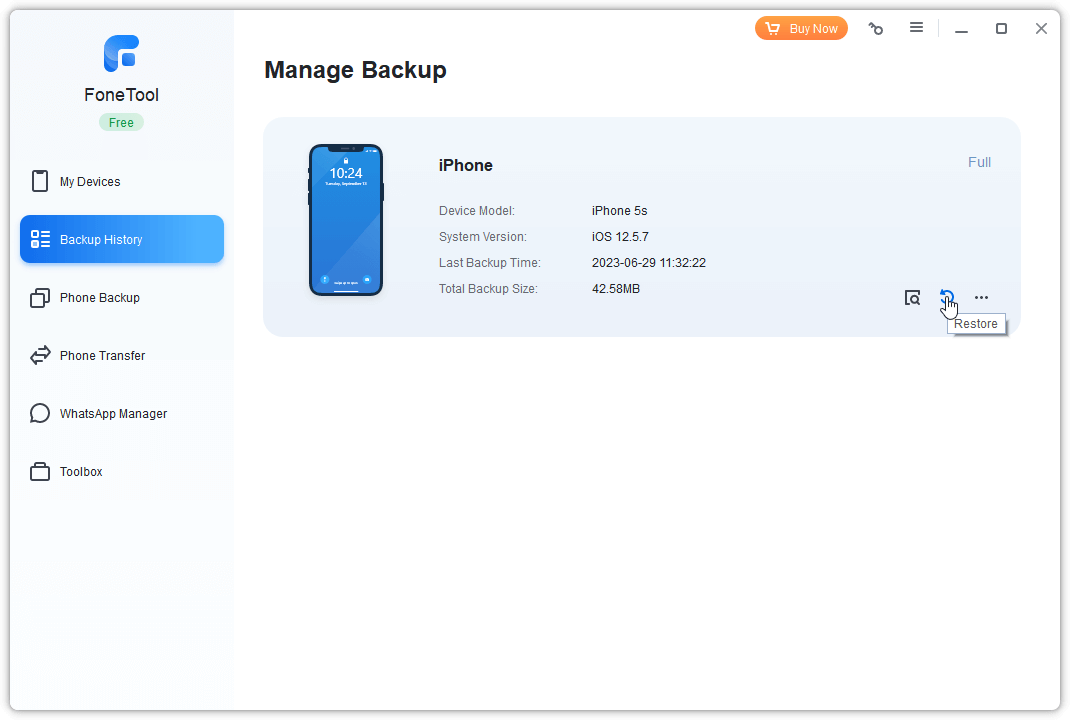
Whenyou need to restore your backup, you cango to Backup History > Tap Restore dot to get data back to your current device, or other devices, even if different Apple IDs.
💡Pro Tip: For system issues caused by problematic updates, FoneTool Repair provides professional iOS system repair services. This powerful tool can fix various system errors including those from failed updates.
Conclusion
This article has outlined what to do if you encounter he issue of iPhone emergency update suddenly pulled by Apple. While such situations are uncommon, they show Apple’s commitment to releasing stable software. To minimize disruption, we recommend regular backups with FoneTool and using FoneTool Repair to troubleshoot system issues. Staying informed through official channels will also help you keep your device running smoothly.
Fixes 160+ iOS/iPadOS issues, boot loops, crashes, failed updates, with no data loss.
-
 iOS 27 Compatible
 iPhone 17 Supported
100% Secure

Kelsey is an English editor at FoneTool, passionate about helping users solve tech issues. She specializes in iPhone data management, backup, and recovery. In her free time, she enjoys learning IT skills and spending time with loved ones.
Read author info >>



 as a preferred
source on Google
as a preferred
source on Google